

Wood Business Cards vs. Paper Business Cards: Are Wooden Cards Worth It?
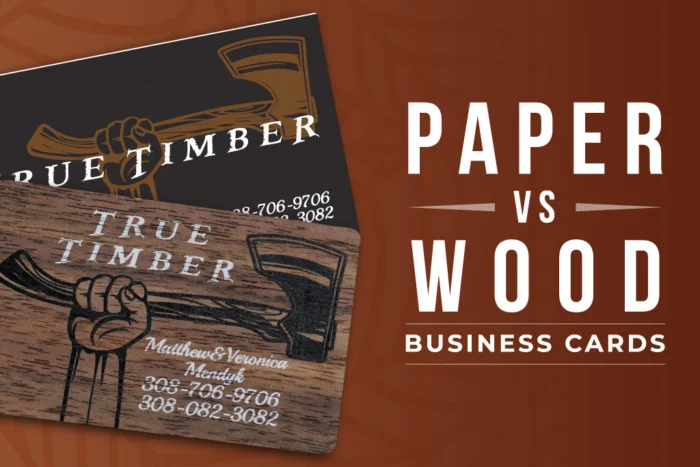
Paper business cards are familiar, affordable, and easy to print. They’ve also been around for a very long time.
So if you’re looking for a business card that people will actually notice, remember, and perhaps even show to someone else, it may be worth thinking beyond paper.
That’s where wood business cards come in.
Wood business cards combine the practicality of a traditional printed business card with the natural texture, grain, and character of real wood. They can feature the same type of branding, artwork, contact information, and creative designs you’d put on a paper card—but on a material that immediately feels different.
And considering paper is already made from trees, why not skip a few steps and hand someone something that looks and feels a little more authentic?
So, wood business cards vs. paper business cards: which should you choose, and are wooden business cards actually worth it?
Let’s compare them.
Wood Business Cards vs. Paper Business Cards at a Glance
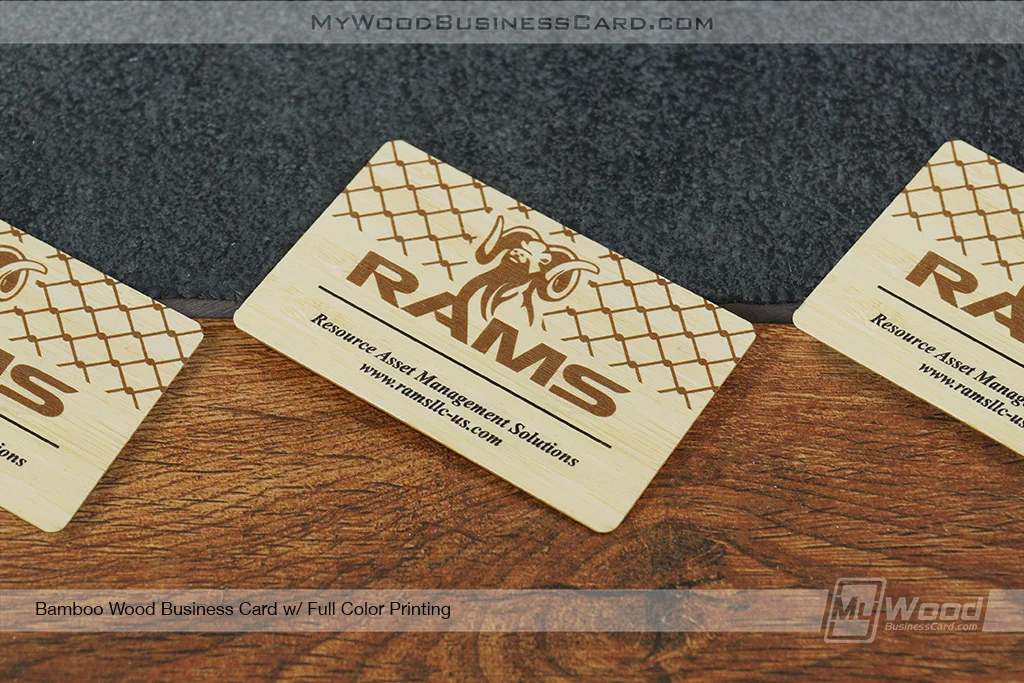
Both wood and paper business cards can do the essential job: give someone your name, company, contact information, and branding.
The biggest difference is the experience of receiving one.
| Features | Wood Business Cards | Paper Business Cards |
| Material | Real wood | Paper/cardstock |
| Look and feel | Natural grain and texture; every card has character | Smooth and consistent |
| Printing | Custom artwork and full designs can be printed | Wide range of printing options |
| Durability | More substantial and durable than typical paper cards | Can bend, crease, or wear |
| Uniqueness | Highly distinctive | Familiar and conventional |
| Design flexibility | Can use existing artwork or a design created specifically for wood | Nearly unlimited conventional print designs |
| Cost | Typically more expensive than standard paper cards | Usually the less expensive option |
| Best for | Making a memorable impression | High-volume, economical distribution |
If your primary goal is simply to distribute as many cards as possible for the lowest cost, paper has an obvious advantage.
But if the impression each card makes matters more, wood becomes much more interesting.
What Makes Wood Business Cards Different?
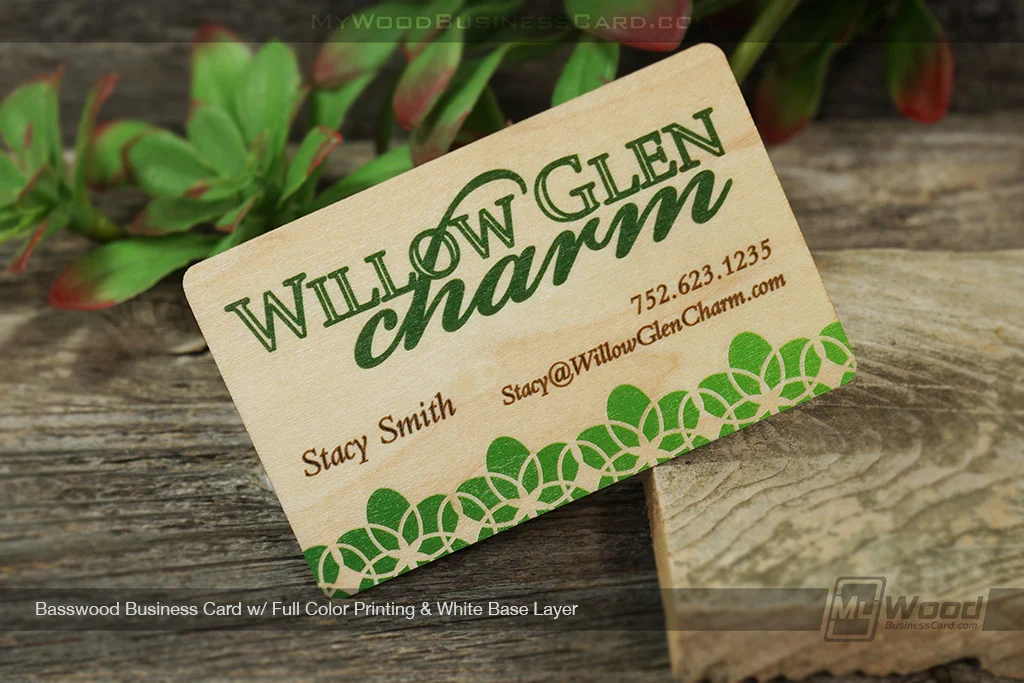
The first thing someone notices about a wooden business card usually isn’t the printing.
It’s the card itself.
Real wood has a texture, grain, and warmth that paper simply doesn’t have. Instead of receiving another piece of cardstock, the person receiving your card is handed an object that feels unusual.
That small moment matters.
Most people have handled hundreds—if not thousands—of paper business cards, appointment cards, flyers, brochures, and other printed pieces. We know what paper feels like before it even reaches our hands.
A wood business card interrupts that expectation.
It invites a second look.
And when the purpose of a business card is to help someone remember you and your business, being different can be extremely valuable.
Paper Comes From Trees. Why Not Go Straight to the Source?
There’s also something satisfyingly simple about the idea of a wooden business card.
Traditional paper starts with wood fiber and goes through an extensive manufacturing process to become the smooth, uniform sheet we’re accustomed to printing on.
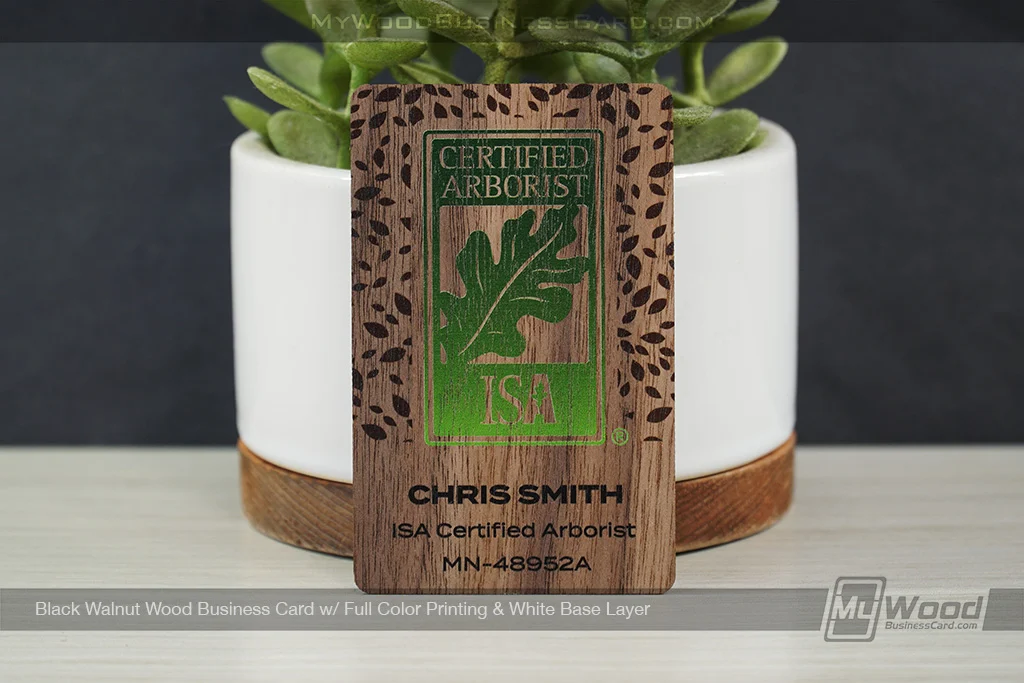
A wood business card preserves something paper removes: the visual and tactile character of the original material.
You can see the grain.
You can feel the wood.
Natural variations can make the material itself part of the design.
That doesn’t make paper a bad material. Paper is incredibly useful precisely because it’s inexpensive, consistent, and easy to print.
But when you’re choosing a material specifically to represent your business, consistency isn’t always the most important consideration.
Sometimes character is.
Do You Have to Compromise on Design With Wood Business Cards?
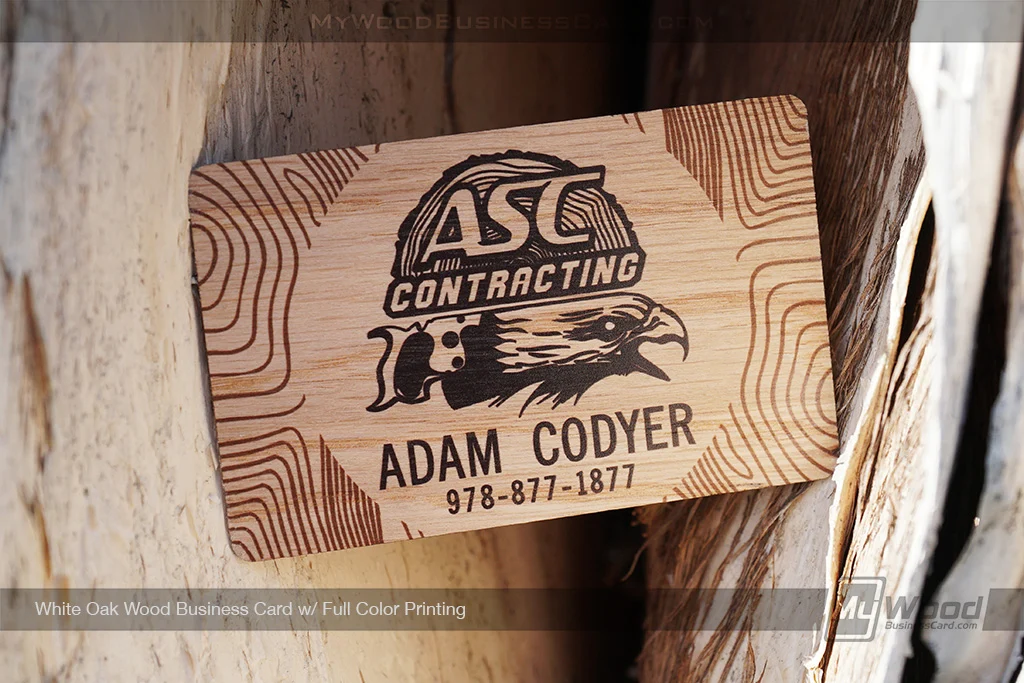
One of the biggest misconceptions about wood business cards is that choosing wood means giving up the design possibilities of a printed paper card.
It doesn’t have to.
Wood business cards can combine printed artwork with the natural appearance of real wood, giving you the opportunity to use color, logos, typography, illustrations, and other branded elements while still allowing the material to be part of the finished design.
In other words, you don’t have to choose between an interesting material and an interesting design.
You can have both.
The wood grain can become another layer of the artwork rather than a limitation.
Depending on the design, you might let large areas of natural wood remain visible, create bold contrast between printed elements and the grain, or adapt a more traditional business-card layout to the wooden surface.
Already Have Paper Business Cards? You Don’t Have to Start Over.
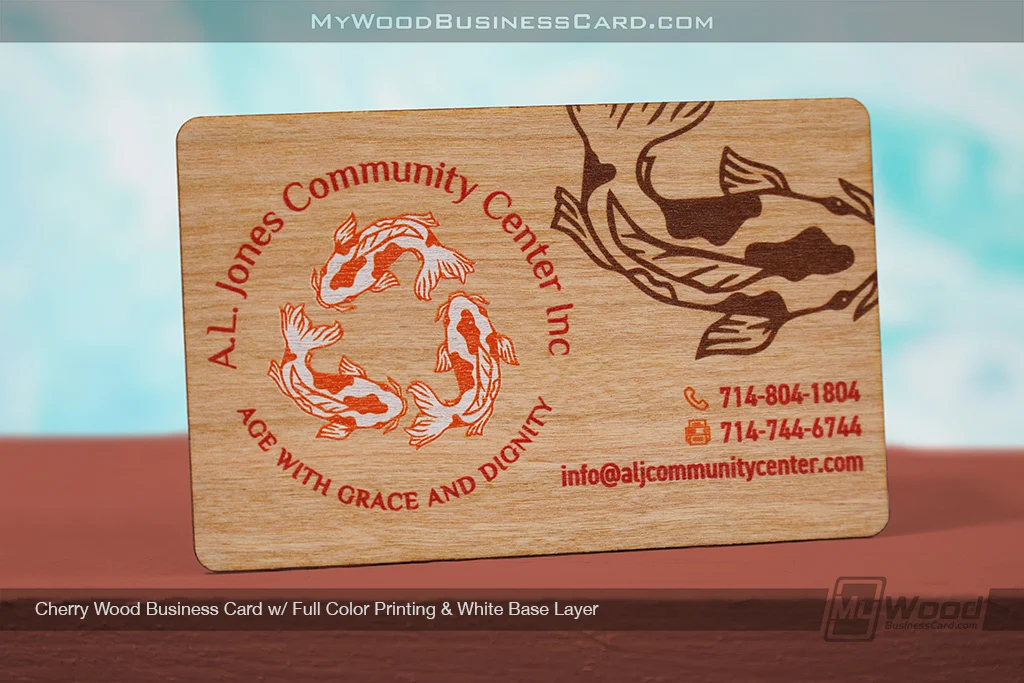
Maybe you already have a business card design you like.
Good news: switching from paper business cards to wood doesn’t necessarily mean redesigning your card from scratch.
We can take an existing paper business card design and adapt it for a wood business card.
Your logo, typography, contact information, colors, and overall brand identity can remain recognizable while the material changes dramatically.
There may even be opportunities to rethink parts of the design specifically for wood—such as allowing more of the natural grain to show through—but you don’t need an entirely new brand identity just because you’re changing materials.
That makes wood cards an option for established businesses as well as new ones.
Are Wood Business Cards More Durable Than Paper?
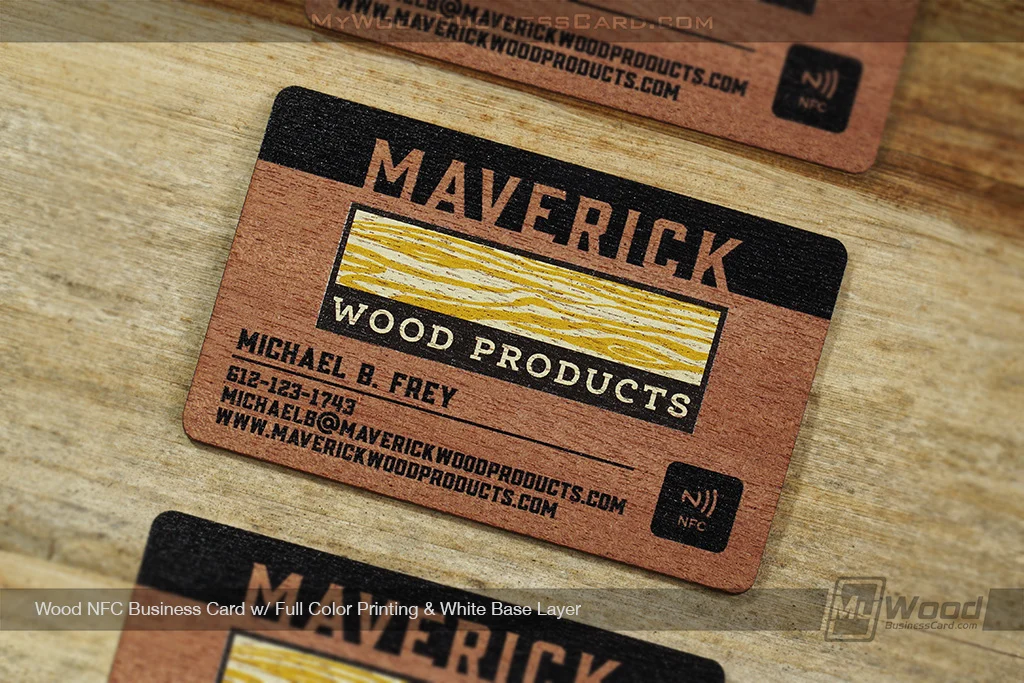
Generally, yes.
A typical paper business card can bend, crease, curl, tear, or become damaged by moisture and repeated handling.
Wood cards have a noticeably different feel and greater rigidity than ordinary paper business cards. Their thickness and durability also contribute to the impression they make when handed to someone.
That doesn’t mean a wood card is indestructible. It is still a thin piece of natural material and should be treated accordingly.
But compared with an ordinary paper card, a wooden business card feels much more substantial.
And that can affect how people treat it.
A paper business card can feel disposable.
A wooden card tends to feel like something worth keeping.
What Types of Wood Can Be Used for Business Cards?
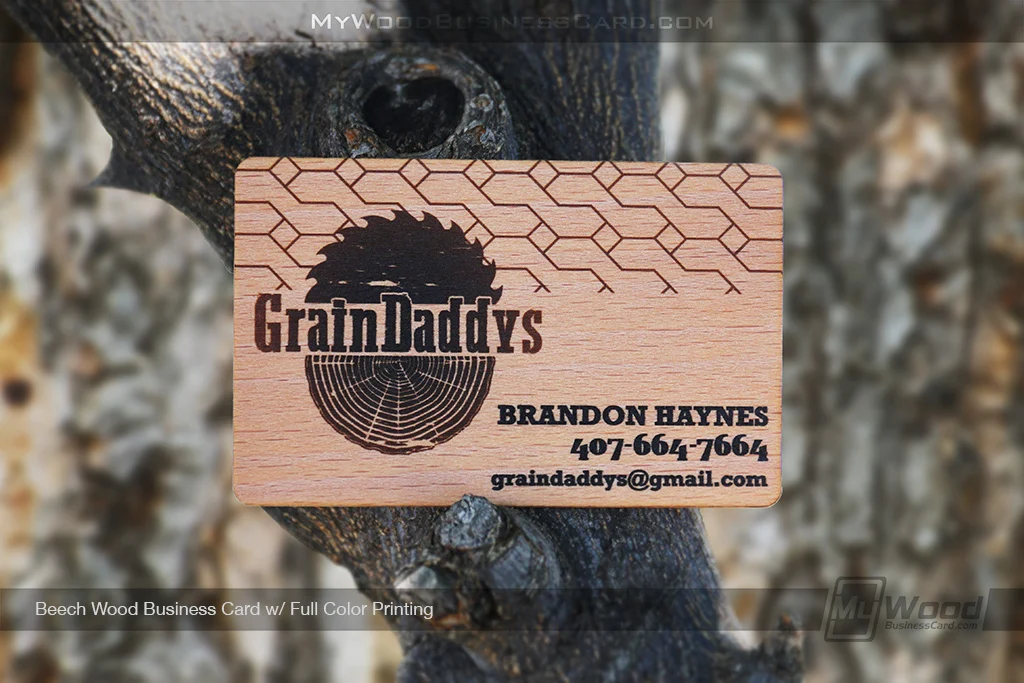
Different wood species can create dramatically different results.
The color of the wood, visibility and direction of the grain, and natural variation in the material can all influence the final appearance of a business card.
That means choosing the wood itself can become part of the design process.
A lighter wood can create one aesthetic, while a richer or darker species can produce an entirely different look. And because you’re working with a natural material, the grain helps give the finished cards a character that can’t be perfectly replicated by printing a wood texture onto paper.
That natural variation is part of the appeal.
You’re not simply printing an image of wood.
You’re printing on real wood.
Do Wooden Business Cards Look Professional?
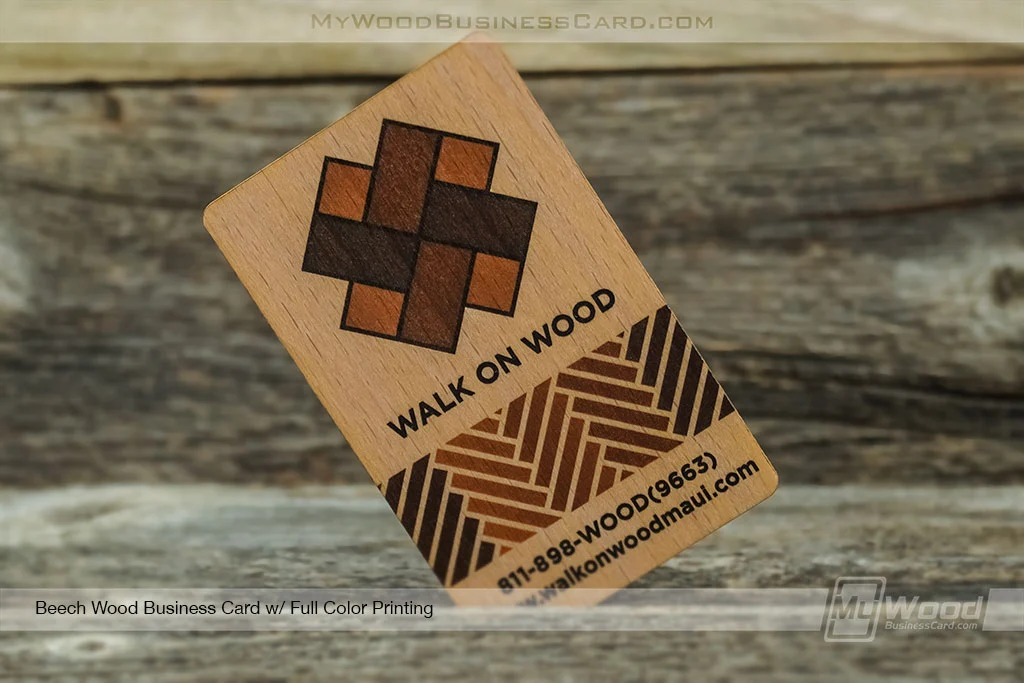
Absolutely, provided they’re designed and produced well.
“Professional” doesn’t have to mean conventional.
A thoughtfully designed wooden business card can work particularly well for businesses and individuals who want their materials to communicate craftsmanship, creativity, quality, or attention to detail.
They can be especially memorable for:
- Designers and creative professionals
- Architects and builders
- Woodworkers and craftspeople
- Real estate professionals
- Restaurants and hospitality businesses
- Photographers
- Makers and independent brands
- Premium products and services
- Businesses with natural, rustic, or outdoors-oriented branding
- Anyone whose brand benefits from doing something unexpected
But you don’t need to work in a wood-related industry to use wood cards.
Sometimes the contrast is exactly what makes them effective.
A wooden business card from a woodworking company makes intuitive sense. A wooden business card from a technology company, consultant, photographer, or luxury service provider can be memorable precisely because you weren’t expecting it.
What Are the Advantages of Paper Business Cards?
Wood isn’t automatically the right answer for everyone.
Paper business cards have several important advantages.
They are generally inexpensive, particularly when ordered in large quantities. They’re lightweight, familiar, easy to carry in bulk, and available with an enormous range of paper stocks, coatings, finishes, printing processes, and specialty options.
If you attend an event where you expect to hand out hundreds or thousands of cards indiscriminately, inexpensive paper cards may make more economic sense.
Paper is also an excellent choice when the card is intended to be temporary or disposable.
There is nothing wrong with choosing paper when volume and cost are the priorities.
The question is what you want the card to accomplish.
What Are the Advantages of Wood Business Cards?
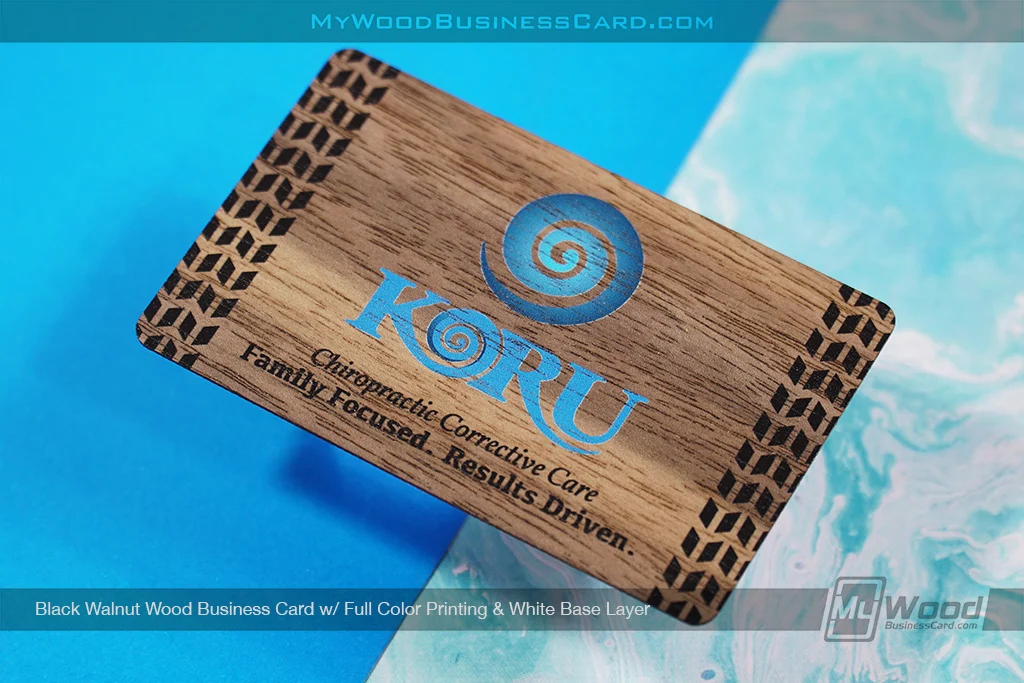
Wood business cards aren’t really about replacing paper in every possible situation.
They’re about making each individual card more meaningful.
Their advantages include the natural look and feel of real wood, greater rigidity than typical paper cards, distinctive grain and texture, custom printing possibilities, and—perhaps most importantly—the ability to stand apart from the enormous number of conventional business cards people encounter.
There’s also an intangible advantage that’s difficult to show on a specification sheet:
People notice them.
When you hand someone something unexpected, you create an opportunity for a conversation.
“What is this made from?”
“Is this actually wood?”
“Where did you get these?”
A business card that generates a question has already accomplished more than simply transferring your phone number.
Are Wooden Business Cards Worth the Extra Cost?
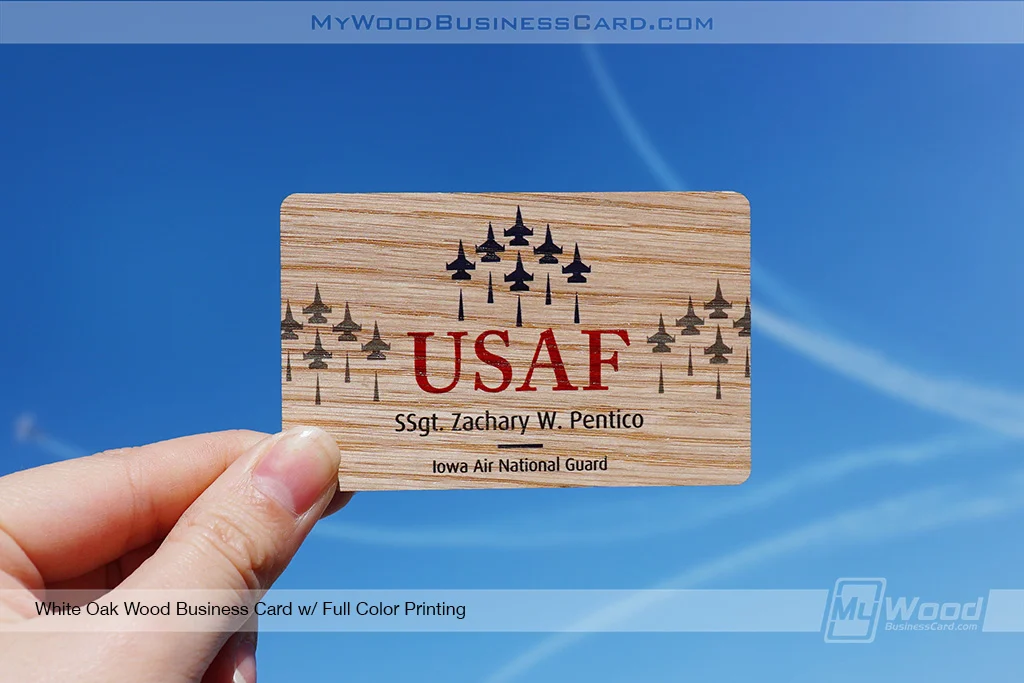
This is ultimately the most important comparison.
Wood business cards usually cost more than ordinary paper business cards.
So are they worth it?
That depends on how you measure the value of a business card.
If you measure value entirely by cost per card, paper will usually win.
If you measure value by memorability, presentation, durability, differentiation, and the impression made by each card, wood has a much stronger case.
Consider how you actually use business cards.
If you hand out thousands and expect most of them to be discarded, investing more in every individual card may not make sense.
But if you give cards to prospective clients, customers, partners, or other valuable contacts—and you want them to remember the interaction—then the additional cost of a wood card can be relatively small compared with the potential value of that relationship.
Instead of asking:
“How much does each card cost?”
It may be more useful to ask:
“What is it worth to have someone remember my card?”
Wood vs. Paper Business Cards: Which Should You Choose?
Choose paper business cards if your top priorities are low cost, very high quantities, lightweight cards, or conventional print options.
Choose wood business cards if your priorities are standing out, creating a memorable first impression, using a more substantial material, and turning your business card into something people are more likely to notice and keep.
And you don’t necessarily have to choose only one.
Some businesses can benefit from using inexpensive paper cards for high-volume situations while reserving wood business cards for important meetings, prospects, events, customers, or introductions where making an impression matters more.
Can I Turn My Existing Business Card Into a Wood Business Card?
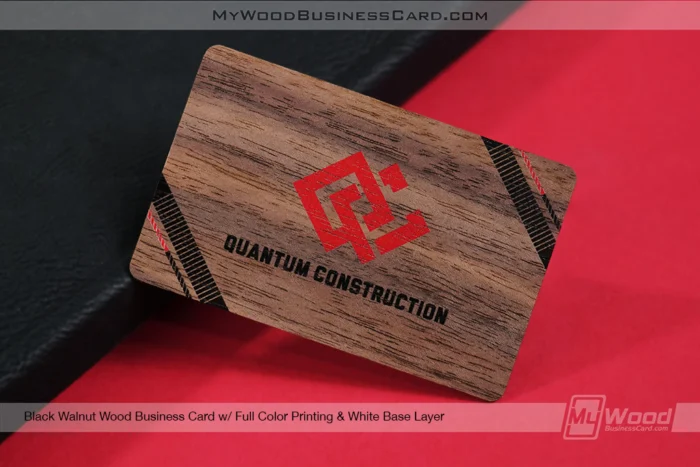
Yes.
If you already have artwork for a paper business card, we can help turn that existing design into a wood business card.
You don’t need to abandon a design that already represents your brand.
Instead, we can look at how your existing artwork translates to real wood and determine how to make the most of the material while preserving the identity of the original design.
And if you’re starting from scratch, wood gives you the opportunity to create a design around the material from the beginning.
Either way, you don’t have to compromise on good design simply because you’re choosing something more interesting than paper.
So, Are Wooden Business Cards Worth It?
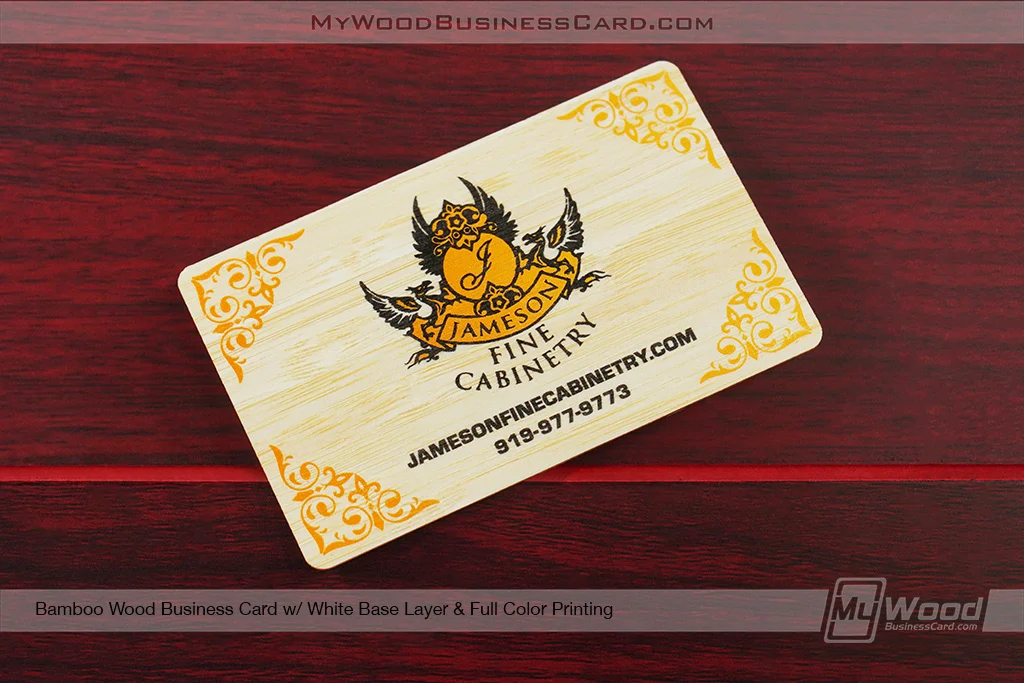
Wooden business cards are worth considering when you want your business card to make an impression—not merely provide information.
Both paper and wooden cards can display your logo, artwork, name, phone number, website, and other details.
Only one of them lets you hand someone a piece of real wood.
It looks different.
It feels different.
And in a stack of ordinary paper business cards, it certainly stands out.
After all, paper business cards already come from trees.
Why not give people something a little closer to the source?